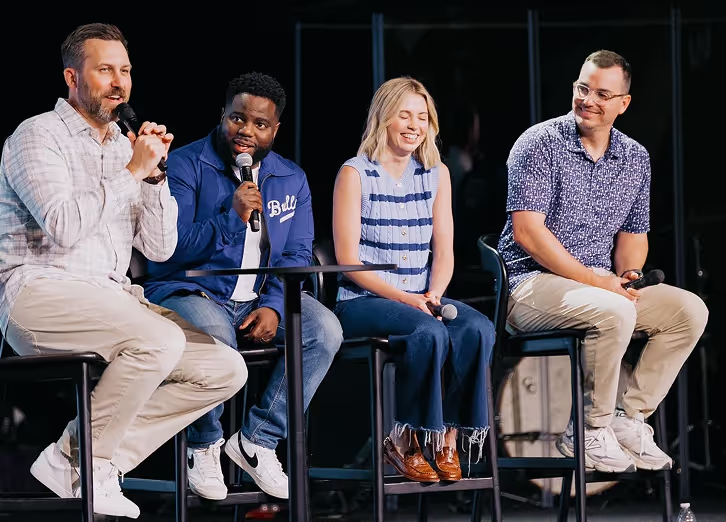
You don't need a developer to build your own church assessment anymore. With AI tools like Claude, pastors are building custom spiritual gifts, personality, and next-steps assessments that carry their church's own brand and point people to real next steps. Pastor Nathan Derenski of Rhythm Church in Cincinnati and Pastor Zach Morris of Essential Church in the Des Moines area aren't tech guys, but they've both built one. Here's what they did, and how you can build one for your church.

Most churches already use some kind of assessment in their growth track: a spiritual gifts test, a personality profile, maybe a church survey. The problem is that most of those tools send people to someone else's website, with someone else's language and branding. And once the results come in, they rarely turn into an actual next step.
AI has removed the technical barrier. If you can clearly describe what you want, you can now build an assessment that lives inside your church's ecosystem and speaks your church's language. Nathan put the need simply: "People don't have a lack of desire to take a next step. They just don't know what next step to take."
Zach started with three results that stack on top of each other. Spiritual gifts are the what. Personality is the how. Passion is the where. Someone might have the gift of encouragement, a quieter personality, and a passion for kids. That person probably won't fire up a room of adults, but they'll make every kid on Sunday feel seen and loved.
Then add season of life. The single mom who just gave her life to Jesus needs something different from the 60-year-old business leader who has followed Christ for 40 years. Nathan's assessment asks about spiritual vibrancy (how often people read the Bible and worship) and what season they're in, then points them to real next steps at Rhythm Church. Not a generic "join a small group," but an actual group on the calendar. Not baptized yet? Here's the next baptism. People get three or four options, like a menu board, and choose the one that fits.
Zach's version produces a five-page profile of who someone is, how they can be pastored in their current season, and where they fit on the team. So far, nearly everyone who reads theirs starts crying. They finally see what God put in them.
Neither of these guys started with a technical background. What they had was clarity. Before asking Claude to build anything, Nathan uploaded Rhythm's brand guidelines, culture points, and the church's own language. Zach gave it his org chart, every role description, and what people face in different seasons of life.
When I studied marketing, you learned quickly that a brand is only as strong as its guidelines. AI works the same way. If the foundation isn't right, you'll get frustrated with the output. Put in the time on the front end, and the tool starts to sound like your church.
The best AI tools for churches don't replace the pastor. They free you up for more of the conversations that matter. Every result at Rhythm connects to a real person, whether that's a small group leader, a team leader, or a staff member, who follows up.
Zach asks people to circle anything in their results that doesn't fit, then updates their profile. Before a one-on-one, he asks Claude what they talked about last time and what to follow up on. When someone steps off his launch team, it shows him who's ready to step in. Nathan is building his so people can retake it every year. If someone rated themselves a two and they're a five three years later, that's a spiritual step worth celebrating.
AI shouldn't write your sermons or send emails so you never have to touch people. Use it to go deeper with the people God has trusted you with. That's how you gain momentum, grow your church, and go the distance in ministry.
Start with your why: do you want people to see their potential, or know their exact next step? Give AI your brand guide, your language, and your ministry teams. Test it with your team, ask what it got wrong, and keep improving it. Rhythm Church plans to open its assessment to anyone at rhythm.church in January, and Zach has already helped three churches start building their own.
In the full conversation, Nathan and Zach walk through how they got started with Claude, how they improved it through trial and error, and how they handle results that miss the mark. Watch it below, or listen on Apple Podcasts, Buzzsprout, or YouTube.
This episode is brought to you by YourTeam.church, the assessment app that helps you place every volunteer where they thrive. Your church gets its own branded link, and your people are matched to a team based on their spiritual gifts and personality, with a look at what life is actually like on that team. Try the Pro tier free for 30 days.
Keep believing and leading strong,
Josh Roberie